
Big Recovery Portal (BRP)
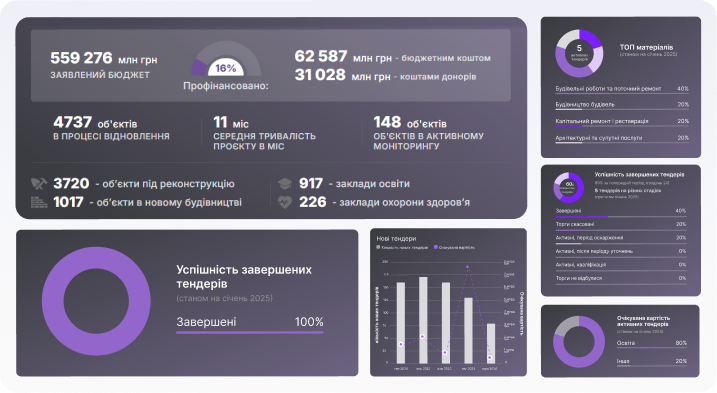
is an online platform that collects a database of recovery projects, analytics on related public spending, and engages citizens in monitoring project quality and relevance as well as overseeing the construction process.
an analytical center working in the areas of recovery, public finance and digital transformation of the public sector.
Over four years of work, we have implemented over 45 projects in cooperation with European partners.
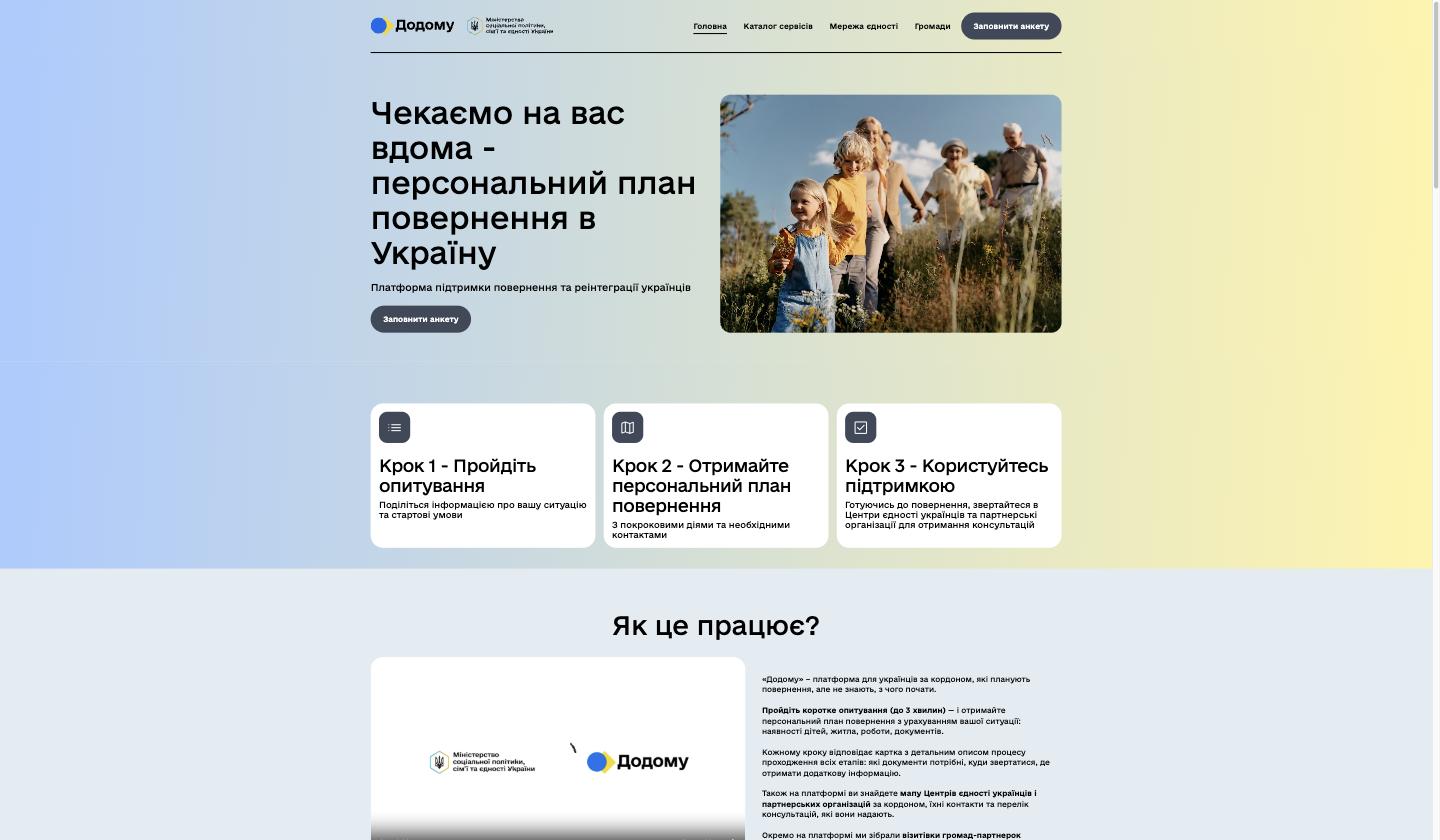
Developed within the project “YOUA – Shaping New Paths, Building Ukraine’s Future”, implemented on behalf of the Federal Ministry for Economic Cooperation and Development (BMZ) and carried out by GIZ Ukraine. __Project Rationale__ The project responds to a systemic challenge — the lack of a coordinated approach among state, municipal, international, and civil society actors involved in return processes. Despite the presence of multiple initiatives, Ukrainians lack a single digital entry point that would consolidate information, services, and support contacts across Ukraine and EU countries. __Project Approach__ The project combines analytical, consultative, and technical components and includes: __Key Activities:__ - analysis of user profiles to identify the needs of different groups (including vulnerable populations); - mapping of stakeholders and services in Ukraine and countries of residence, identifying gaps, overlaps, and responsibilities; - assessment of existing digital and offline services (e.g. Diia, UISSS, e-Consul, UNHCR, NGO initiatives) to identify integration potential; - development of the platform concept, including key functional components: personalised guidance plan; service catalogue; municipality profiles; partner ecosystem; - preparation of technical documentation (architecture, MVP, ToR, security approaches) for further development and scaling; - organisation of consultations and validation processes with government institutions, donors, and international partners. __Expected Results__ - a developed and validated concept of the integrated digital platform, including functionalities and user journeys; - a complete technical documentation package for further development and piloting; - an analytical foundation for policy development in return and reintegration; - strengthened coordination and interaction among stakeholders; - increased readiness of municipalities to receive returnees through identification of pilot locations and development of roadmaps. The project lays the foundation for an integrated digital ecosystem that enables a shift from fragmented information to structured decision-making, supporting safe, informed, and dignified return, as well as effective reintegration of Ukrainians in local communities.
Проєкт спрямований на системне підвищення рівня безбар’єрності у громадах через поєднання фактичної оцінки доступності, аналітики та створення умов для інвестиційного планування. У межах ініціативи буде проведено оцінку рівня безбар’єрності 60 об’єктів соціальної інфраструктури у чотирьох громадах України, за результатами якої сформовано дорожню карту з обґрунтованою пріоритизацією об’єктів, що потребують першочергових інфраструктурних інвестицій. Важливою складовою проєкту є підвищення обізнаності громад та ключових стейкхолдерів щодо проблем доступності через проведення навчальних, презентаційних, діалогових заходів, вебінарів та адвокаційних кампаній. Паралельно проєкт передбачає розроблення аналітичних матеріалів, які стануть основою для прийняття управлінських рішень у сфері відновлення та розвитку соціальної інфраструктури. Окремий фокус — підтримка органів місцевого самоврядування у підготовці грантових заявок і проєктних пропозицій для залучення ресурсів соціально відповідального бізнесу та донорських програм. У результаті буде подано інвестиційні проєкти, спрямовані на практичне впровадження рішень із підвищення доступності. Проєкт формує комплексний підхід до створення безбар’єрного середовища — від збору даних і визначення пріоритетів до залучення фінансування та впровадження змін — і створює практичні інструменти для довгострокового планування розвитку громад на засадах інклюзії та рівного доступу.
The State Service of Geology and Mineral Resources of Ukraine (SSGSU) is the National Upstream Regulator, ensuring the safe, efficient, and environmentally responsible development of mineral resources while providing economic benefits for Ukrainian people: - SSGSU is a central executive body, whose activities are directed and coordinated through the Minister of Economy - Among SSGSU’s functions are issuing exploration and production licenses for all mineral resources, - supervising their performance, carrying out geologic assessments across the country, and implementing production sharing agreements. - While a relatively small organization (~130 people) it also has 12 state enterprises and institutions with convoluted functions - i.e. managing state geological data, estimating reserves, etc. Scope of work: The project is expected to take ~3 months and include the following: - conducting interviews with key employees of the Ukrainian Geological Survey and relevant state enterprises - description of key business processes related to interaction with business (obtaining and extending special permits, etc.) - creating BPMN maps in a format suitable for developing TOR for digitalization of processes - analysis of key business processes for compliance with legislation in the field of geological exploration and rational use of resources - identification of potential corruption risks in the analysed business processes - identification of potential deregulatory measures for business - identification of potential burdensome internal processes Project deliverables will include: - written report of the project findings and recommendations, - a BPMN notation map of business processes.
The project included: - conducting interviews with key stakeholders; - summarizing and interpreting the results of available information and surveys; - describing and impact analysis of key historical changes and regulatory decisions; - analysis of trends in recent years and full-scale invasion impact/risks; - comparing key metrics of the pharmaceutical market with similar countries; - developing several scenarios of possible market development depending on regulatory impact; - analysis of possible impact on key metrics of the pharmaceutical market; - comparative analysis of scenarios in the context of impact on key stakeholders; - conclusions on investment attractiveness and possible investment incentives.
Developed within the project “YOUA – Shaping New Paths, Building Ukraine’s Future”, implemented on behalf of the Federal Ministry for Economic Cooperation and Development (BMZ) and carried out by GIZ Ukraine. __Project Rationale__ The project responds to a systemic challenge — the lack of a coordinated approach among state, municipal, international, and civil society actors involved in return processes. Despite the presence of multiple initiatives, Ukrainians lack a single digital entry point that would consolidate information, services, and support contacts across Ukraine and EU countries. __Project Approach__ The project combines analytical, consultative, and technical components and includes: __Key Activities:__ - analysis of user profiles to identify the needs of different groups (including vulnerable populations); - mapping of stakeholders and services in Ukraine and countries of residence, identifying gaps, overlaps, and responsibilities; - assessment of existing digital and offline services (e.g. Diia, UISSS, e-Consul, UNHCR, NGO initiatives) to identify integration potential; - development of the platform concept, including key functional components: personalised guidance plan; service catalogue; municipality profiles; partner ecosystem; - preparation of technical documentation (architecture, MVP, ToR, security approaches) for further development and scaling; - organisation of consultations and validation processes with government institutions, donors, and international partners. __Expected Results__ - a developed and validated concept of the integrated digital platform, including functionalities and user journeys; - a complete technical documentation package for further development and piloting; - an analytical foundation for policy development in return and reintegration; - strengthened coordination and interaction among stakeholders; - increased readiness of municipalities to receive returnees through identification of pilot locations and development of roadmaps. The project lays the foundation for an integrated digital ecosystem that enables a shift from fragmented information to structured decision-making, supporting safe, informed, and dignified return, as well as effective reintegration of Ukrainians in local communities.
ToP has teamed up with the [NGO Centre for Economic Strategy (CES)](https://ces.org.ua/) and the [NGO Institute for Economic Research and Policy Consulting](www.ier.com.ua/ua) to implement a large-scale EU-backed project “The Recovery Spending Watchdog”. The Project was launched in June 2023 and is expected to be completed by the end of 2025. The Project was launched in the wake of the full-scale russian invasion of Ukraine on 24 February 2022. The ongoing hostilities have devastated the country and inflicted grave damage on the Ukrainian infrastructure, production, social, residential, and other facilities. In response, the international community is providing Ukraine with emergency financial support. The recovery of Ukraine promises to be one of the most challenging undertakings which requires an environment of trust among donors, policymakers, and the Ukrainian society based on transparency and accountability. Thus, well-organized and real-time monitoring by the civil society of recovery spending is of paramount importance. To meet the above challenge the Project team will: * ensure open access to reconstruction information within the Ukrainian society by creating a special online instrument – the Big Recovery Portal; * educate BRP users (especially CSOs, journalists, local community, and anti-corruption/ law enforcement representatives) on the BPR functionality to present mechanisms needed for corruption and other wrongdoing reporting; * monitor the reconstruction spending from publicly available sources; and * assist the Ukrainian government in making better decisions on funding the recovery by providing regular monitoring reports on reconstruction spending. ToP is responsible for the software development of the Big Recovery Portal (BRP) which is a central pillar of the Project. BRP will collect holistic data on recovery projects, their lifecycle, and financing and will present this information in a user-friendly and understandable way. The portal will collect data (reports, complaints, pictures, etc.) from the state, crowdsourced, and NGO sources. It will be integrated with other state-owned and partner project management platforms and data systems (DREAM, damaged.in.ua, Dozorro, opendatabot, etc.) to process and combine all available information about recovery projects. Moreover, BRP plans to provide the possibility for external users to upload community feedback and risk-related data to be taken into account by the state bodies. BRP will have a BI tool for producing independent analytics - statistics, reconstruction progress, reports, etc., that will provide better access and visibility for all actors (citizens, SMEs, NGOs, journalists, government officials, etc.). As a result, anyone will have an opportunity to monitor the reconstruction process, its timeline, and quality, identify typical problems and challenges facing recovery processes, and assess the efficiency of recovery spending. This will lead to better civil engagement in recovery oversight and whistleblowing. Potential whistleblowers will have better instruments to report wrongdoings. We believe better civil engagement will contribute to more accountable and transparent decision-making by the state agencies. BRP will also have an automated risk-management system that will calculate risk profiles of reconstruction projects by certain risk indicators and range them by risk levels, which will allow for prioritizing monitoring. BRP will collect and present info on business opportunities and potential reconstruction tenders for businesses. Among other features, it will maintain a database of suppliers for typical works and highlight areas of poor supply or above-average prices for prospective suppliers. BRP is expected to become an important part of Ukraine’s post-war recovery infrastructure. Implementation of the “Recovery Spending Watchdog” project goes in line with the values of integrity, sustainability, and efficiency of the [RISE coalition](https://www.rise.org.ua/), which was created by the leading civil society organizations (including ToP, CES, and IER) to support the recovery of Ukraine.
Developed within the project “YOUA – Shaping New Paths, Building Ukraine’s Future”, implemented on behalf of the Federal Ministry for Economic Cooperation and Development (BMZ) and carried out by GIZ Ukraine. __Project Rationale__ The project responds to a systemic challenge — the lack of a coordinated approach among state, municipal, international, and civil society actors involved in return processes. Despite the presence of multiple initiatives, Ukrainians lack a single digital entry point that would consolidate information, services, and support contacts across Ukraine and EU countries. __Project Approach__ The project combines analytical, consultative, and technical components and includes: __Key Activities:__ - analysis of user profiles to identify the needs of different groups (including vulnerable populations); - mapping of stakeholders and services in Ukraine and countries of residence, identifying gaps, overlaps, and responsibilities; - assessment of existing digital and offline services (e.g. Diia, UISSS, e-Consul, UNHCR, NGO initiatives) to identify integration potential; - development of the platform concept, including key functional components: personalised guidance plan; service catalogue; municipality profiles; partner ecosystem; - preparation of technical documentation (architecture, MVP, ToR, security approaches) for further development and scaling; - organisation of consultations and validation processes with government institutions, donors, and international partners. __Expected Results__ - a developed and validated concept of the integrated digital platform, including functionalities and user journeys; - a complete technical documentation package for further development and piloting; - an analytical foundation for policy development in return and reintegration; - strengthened coordination and interaction among stakeholders; - increased readiness of municipalities to receive returnees through identification of pilot locations and development of roadmaps. The project lays the foundation for an integrated digital ecosystem that enables a shift from fragmented information to structured decision-making, supporting safe, informed, and dignified return, as well as effective reintegration of Ukrainians in local communities.
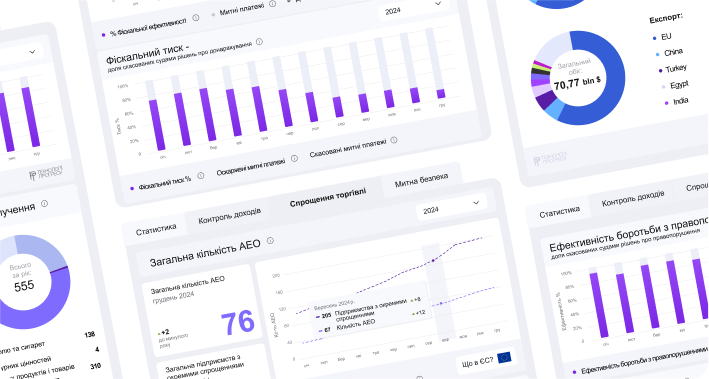
Partnering with the "Institute of Analytics and Advocacy", the ToP team started implementation of the project "Accountability and Capacity-building for Customs Oversight and Reform Development". This initiative was launched at the end of 2023 in response to the challenges in front of Ukrainian customs, including the ongoing war and the expected start of negotiations on Ukraine’s accession to the EU. The project’s duration is 3 years and is funded by the EU. The main tasks of the project are focused on improving transparency, accountability and efficiency of the State Customs Service of Ukraine, as well as on recommendations for the modernization of its activities in accordance with EU standards and requirements. It will contribute to strengthening the economic security of Ukraine, which is important in the context of post-war reconstruction. The project tasks are focused on the four main areas: * Increasing awareness and competences of non-governmental organizations and anti-corruption watchdogs regarding customs operations, which will allow to better recognize and respond to possible deviations from optimal procedures; * Implementation of public analytical tools for objective assessment of the effectiveness of customs authorities and the activities of the customs service as a whole; * Monitoring the progress of legislative and institutional reforms on the path to bring Ukrainian customs closer to EU standards (for example, regular assessment of the effectiveness of the criminalization of smuggling recently introduced by the Parliament, preparation of shadow reports on the assessment of progress of negotiations under chapter 29 regarding the Customs Union, etc.); * Strengthening dialogue and cooperation between the government, general public and business aimed at effective customs reform and bringing customs operations up to the EU standards. Within the framework of the project, sub-grants will also be provided to several non-governmental organizations aiming at strengthening capacities and including wider civil society in the monitoring of the customs service operation.
Developed within the project “YOUA – Shaping New Paths, Building Ukraine’s Future”, implemented on behalf of the Federal Ministry for Economic Cooperation and Development (BMZ) and carried out by GIZ Ukraine. __Project Rationale__ The project responds to a systemic challenge — the lack of a coordinated approach among state, municipal, international, and civil society actors involved in return processes. Despite the presence of multiple initiatives, Ukrainians lack a single digital entry point that would consolidate information, services, and support contacts across Ukraine and EU countries. __Project Approach__ The project combines analytical, consultative, and technical components and includes: __Key Activities:__ - analysis of user profiles to identify the needs of different groups (including vulnerable populations); - mapping of stakeholders and services in Ukraine and countries of residence, identifying gaps, overlaps, and responsibilities; - assessment of existing digital and offline services (e.g. Diia, UISSS, e-Consul, UNHCR, NGO initiatives) to identify integration potential; - development of the platform concept, including key functional components: personalised guidance plan; service catalogue; municipality profiles; partner ecosystem; - preparation of technical documentation (architecture, MVP, ToR, security approaches) for further development and scaling; - organisation of consultations and validation processes with government institutions, donors, and international partners. __Expected Results__ - a developed and validated concept of the integrated digital platform, including functionalities and user journeys; - a complete technical documentation package for further development and piloting; - an analytical foundation for policy development in return and reintegration; - strengthened coordination and interaction among stakeholders; - increased readiness of municipalities to receive returnees through identification of pilot locations and development of roadmaps. The project lays the foundation for an integrated digital ecosystem that enables a shift from fragmented information to structured decision-making, supporting safe, informed, and dignified return, as well as effective reintegration of Ukrainians in local communities.
In June 2025, the NGO “Technologies of Progress” experts launched the project “AI for Efficient Public Governance” within the framework of the EU funded project “Continued support of the comprehensive public administration reform in Ukraine” (EU4PAR 2), aimed at supporting Ukraine’s civil service in developing practical skills for the ethical and effective use of artificial intelligence (AI) tools in public administration. The primary focus is on the practical application of large language models (LLMs), such as ChatGPT, Claude, and Gemini, to enhance: - administrative efficiency; - the quality of public service delivery; - and data-driven decision-making. Through this initiative, public officials gain the knowledge and tools necessary to integrate AI into their daily work processes while adhering to legal requirements, ethical standards, and personal data protection regulations. The project envisions the implementation of a structured, multi-phase programme of training and deployment, targeting policy and administrative managers, legal experts, HR professionals, and civil servants from central and regional government bodies. Participants receive task-specific, tailored knowledge for AI applications in: - document processing; - public communication; - regulatory drafting; - and internal reporting. A particular emphasis is placed on data protection, legal compliance, and responsible technology use. The training is complemented by individual consultations, the creation of micro-tool prototypes, and the development of institutional AI implementation roadmaps. Additionally, the project includes the development of applied solutions based on real-life use cases: templates for automation, prompts for response generation, or tools for workflow optimization — tailored to the operational context of each institution. The project’s methodology is designed to be scalable to meet the needs of Ukraine’s public sector and holds potential for integration into training programmes via the National Agency of Ukraine on Civil Service (NAUCS) and for the dissemination of practices through professional public service networks. The initiative directly contributes to Ukraine’s commitments under Chapter 10 of the EU acquis (Information Society and Media), the Law of Ukraine “On Digital Development”, and the Digital Transformation Strategy 2020–2030. Furthermore, it supports reforms under the Ukraine Facility financing plan and the IMF Extended Fund Facility (EFF) programme by strengthening the capacity of public authorities for more efficient, transparent, and citizen-oriented governance. The project was implemented as a joint initiative of the EU4PAR project and the NGO “Technologies of Progress”
ToP has teamed up with the [NGO Centre for Economic Strategy (CES)](https://ces.org.ua/) and the [NGO Institute for Economic Research and Policy Consulting](www.ier.com.ua/ua) to implement a large-scale EU-backed project “The Recovery Spending Watchdog”. The Project was launched in June 2023 and is expected to be completed by the end of 2025. The Project was launched in the wake of the full-scale russian invasion of Ukraine on 24 February 2022. The ongoing hostilities have devastated the country and inflicted grave damage on the Ukrainian infrastructure, production, social, residential, and other facilities. In response, the international community is providing Ukraine with emergency financial support. The recovery of Ukraine promises to be one of the most challenging undertakings which requires an environment of trust among donors, policymakers, and the Ukrainian society based on transparency and accountability. Thus, well-organized and real-time monitoring by the civil society of recovery spending is of paramount importance. To meet the above challenge the Project team will: * ensure open access to reconstruction information within the Ukrainian society by creating a special online instrument – the Big Recovery Portal; * educate BRP users (especially CSOs, journalists, local community, and anti-corruption/ law enforcement representatives) on the BPR functionality to present mechanisms needed for corruption and other wrongdoing reporting; * monitor the reconstruction spending from publicly available sources; and * assist the Ukrainian government in making better decisions on funding the recovery by providing regular monitoring reports on reconstruction spending. ToP is responsible for the software development of the Big Recovery Portal (BRP) which is a central pillar of the Project. BRP will collect holistic data on recovery projects, their lifecycle, and financing and will present this information in a user-friendly and understandable way. The portal will collect data (reports, complaints, pictures, etc.) from the state, crowdsourced, and NGO sources. It will be integrated with other state-owned and partner project management platforms and data systems (DREAM, damaged.in.ua, Dozorro, opendatabot, etc.) to process and combine all available information about recovery projects. Moreover, BRP plans to provide the possibility for external users to upload community feedback and risk-related data to be taken into account by the state bodies. BRP will have a BI tool for producing independent analytics - statistics, reconstruction progress, reports, etc., that will provide better access and visibility for all actors (citizens, SMEs, NGOs, journalists, government officials, etc.). As a result, anyone will have an opportunity to monitor the reconstruction process, its timeline, and quality, identify typical problems and challenges facing recovery processes, and assess the efficiency of recovery spending. This will lead to better civil engagement in recovery oversight and whistleblowing. Potential whistleblowers will have better instruments to report wrongdoings. We believe better civil engagement will contribute to more accountable and transparent decision-making by the state agencies. BRP will also have an automated risk-management system that will calculate risk profiles of reconstruction projects by certain risk indicators and range them by risk levels, which will allow for prioritizing monitoring. BRP will collect and present info on business opportunities and potential reconstruction tenders for businesses. Among other features, it will maintain a database of suppliers for typical works and highlight areas of poor supply or above-average prices for prospective suppliers. BRP is expected to become an important part of Ukraine’s post-war recovery infrastructure. Implementation of the “Recovery Spending Watchdog” project goes in line with the values of integrity, sustainability, and efficiency of the [RISE coalition](https://www.rise.org.ua/), which was created by the leading civil society organizations (including ToP, CES, and IER) to support the recovery of Ukraine.
Partnering with the "Institute of Analytics and Advocacy", the ToP team started implementation of the project "Accountability and Capacity-building for Customs Oversight and Reform Development". This initiative was launched at the end of 2023 in response to the challenges in front of Ukrainian customs, including the ongoing war and the expected start of negotiations on Ukraine’s accession to the EU. The project’s duration is 3 years and is funded by the EU. The main tasks of the project are focused on improving transparency, accountability and efficiency of the State Customs Service of Ukraine, as well as on recommendations for the modernization of its activities in accordance with EU standards and requirements. It will contribute to strengthening the economic security of Ukraine, which is important in the context of post-war reconstruction. The project tasks are focused on the four main areas: * Increasing awareness and competences of non-governmental organizations and anti-corruption watchdogs regarding customs operations, which will allow to better recognize and respond to possible deviations from optimal procedures; * Implementation of public analytical tools for objective assessment of the effectiveness of customs authorities and the activities of the customs service as a whole; * Monitoring the progress of legislative and institutional reforms on the path to bring Ukrainian customs closer to EU standards (for example, regular assessment of the effectiveness of the criminalization of smuggling recently introduced by the Parliament, preparation of shadow reports on the assessment of progress of negotiations under chapter 29 regarding the Customs Union, etc.); * Strengthening dialogue and cooperation between the government, general public and business aimed at effective customs reform and bringing customs operations up to the EU standards. Within the framework of the project, sub-grants will also be provided to several non-governmental organizations aiming at strengthening capacities and including wider civil society in the monitoring of the customs service operation.
Developed within the project “YOUA – Shaping New Paths, Building Ukraine’s Future”, implemented on behalf of the Federal Ministry for Economic Cooperation and Development (BMZ) and carried out by GIZ Ukraine. __Project Rationale__ The project responds to a systemic challenge — the lack of a coordinated approach among state, municipal, international, and civil society actors involved in return processes. Despite the presence of multiple initiatives, Ukrainians lack a single digital entry point that would consolidate information, services, and support contacts across Ukraine and EU countries. __Project Approach__ The project combines analytical, consultative, and technical components and includes: __Key Activities:__ - analysis of user profiles to identify the needs of different groups (including vulnerable populations); - mapping of stakeholders and services in Ukraine and countries of residence, identifying gaps, overlaps, and responsibilities; - assessment of existing digital and offline services (e.g. Diia, UISSS, e-Consul, UNHCR, NGO initiatives) to identify integration potential; - development of the platform concept, including key functional components: personalised guidance plan; service catalogue; municipality profiles; partner ecosystem; - preparation of technical documentation (architecture, MVP, ToR, security approaches) for further development and scaling; - organisation of consultations and validation processes with government institutions, donors, and international partners. __Expected Results__ - a developed and validated concept of the integrated digital platform, including functionalities and user journeys; - a complete technical documentation package for further development and piloting; - an analytical foundation for policy development in return and reintegration; - strengthened coordination and interaction among stakeholders; - increased readiness of municipalities to receive returnees through identification of pilot locations and development of roadmaps. The project lays the foundation for an integrated digital ecosystem that enables a shift from fragmented information to structured decision-making, supporting safe, informed, and dignified return, as well as effective reintegration of Ukrainians in local communities.
Проєкт спрямований на системне підвищення рівня безбар’єрності у громадах через поєднання фактичної оцінки доступності, аналітики та створення умов для інвестиційного планування. У межах ініціативи буде проведено оцінку рівня безбар’єрності 60 об’єктів соціальної інфраструктури у чотирьох громадах України, за результатами якої сформовано дорожню карту з обґрунтованою пріоритизацією об’єктів, що потребують першочергових інфраструктурних інвестицій. Важливою складовою проєкту є підвищення обізнаності громад та ключових стейкхолдерів щодо проблем доступності через проведення навчальних, презентаційних, діалогових заходів, вебінарів та адвокаційних кампаній. Паралельно проєкт передбачає розроблення аналітичних матеріалів, які стануть основою для прийняття управлінських рішень у сфері відновлення та розвитку соціальної інфраструктури. Окремий фокус — підтримка органів місцевого самоврядування у підготовці грантових заявок і проєктних пропозицій для залучення ресурсів соціально відповідального бізнесу та донорських програм. У результаті буде подано інвестиційні проєкти, спрямовані на практичне впровадження рішень із підвищення доступності. Проєкт формує комплексний підхід до створення безбар’єрного середовища — від збору даних і визначення пріоритетів до залучення фінансування та впровадження змін — і створює практичні інструменти для довгострокового планування розвитку громад на засадах інклюзії та рівного доступу.
In June 2025, the NGO “Technologies of Progress” experts launched the project “AI for Efficient Public Governance” within the framework of the EU funded project “Continued support of the comprehensive public administration reform in Ukraine” (EU4PAR 2), aimed at supporting Ukraine’s civil service in developing practical skills for the ethical and effective use of artificial intelligence (AI) tools in public administration. The primary focus is on the practical application of large language models (LLMs), such as ChatGPT, Claude, and Gemini, to enhance: - administrative efficiency; - the quality of public service delivery; - and data-driven decision-making. Through this initiative, public officials gain the knowledge and tools necessary to integrate AI into their daily work processes while adhering to legal requirements, ethical standards, and personal data protection regulations. The project envisions the implementation of a structured, multi-phase programme of training and deployment, targeting policy and administrative managers, legal experts, HR professionals, and civil servants from central and regional government bodies. Participants receive task-specific, tailored knowledge for AI applications in: - document processing; - public communication; - regulatory drafting; - and internal reporting. A particular emphasis is placed on data protection, legal compliance, and responsible technology use. The training is complemented by individual consultations, the creation of micro-tool prototypes, and the development of institutional AI implementation roadmaps. Additionally, the project includes the development of applied solutions based on real-life use cases: templates for automation, prompts for response generation, or tools for workflow optimization — tailored to the operational context of each institution. The project’s methodology is designed to be scalable to meet the needs of Ukraine’s public sector and holds potential for integration into training programmes via the National Agency of Ukraine on Civil Service (NAUCS) and for the dissemination of practices through professional public service networks. The initiative directly contributes to Ukraine’s commitments under Chapter 10 of the EU acquis (Information Society and Media), the Law of Ukraine “On Digital Development”, and the Digital Transformation Strategy 2020–2030. Furthermore, it supports reforms under the Ukraine Facility financing plan and the IMF Extended Fund Facility (EFF) programme by strengthening the capacity of public authorities for more efficient, transparent, and citizen-oriented governance. The project was implemented as a joint initiative of the EU4PAR project and the NGO “Technologies of Progress”
Partnering with the "Institute of Analytics and Advocacy", the ToP team started implementation of the project "Accountability and Capacity-building for Customs Oversight and Reform Development". This initiative was launched at the end of 2023 in response to the challenges in front of Ukrainian customs, including the ongoing war and the expected start of negotiations on Ukraine’s accession to the EU. The project’s duration is 3 years and is funded by the EU. The main tasks of the project are focused on improving transparency, accountability and efficiency of the State Customs Service of Ukraine, as well as on recommendations for the modernization of its activities in accordance with EU standards and requirements. It will contribute to strengthening the economic security of Ukraine, which is important in the context of post-war reconstruction. The project tasks are focused on the four main areas: * Increasing awareness and competences of non-governmental organizations and anti-corruption watchdogs regarding customs operations, which will allow to better recognize and respond to possible deviations from optimal procedures; * Implementation of public analytical tools for objective assessment of the effectiveness of customs authorities and the activities of the customs service as a whole; * Monitoring the progress of legislative and institutional reforms on the path to bring Ukrainian customs closer to EU standards (for example, regular assessment of the effectiveness of the criminalization of smuggling recently introduced by the Parliament, preparation of shadow reports on the assessment of progress of negotiations under chapter 29 regarding the Customs Union, etc.); * Strengthening dialogue and cooperation between the government, general public and business aimed at effective customs reform and bringing customs operations up to the EU standards. Within the framework of the project, sub-grants will also be provided to several non-governmental organizations aiming at strengthening capacities and including wider civil society in the monitoring of the customs service operation.
is an online platform that collects a database of recovery projects, analytics on related public spending, and engages citizens in monitoring project quality and relevance as well as overseeing the construction process.